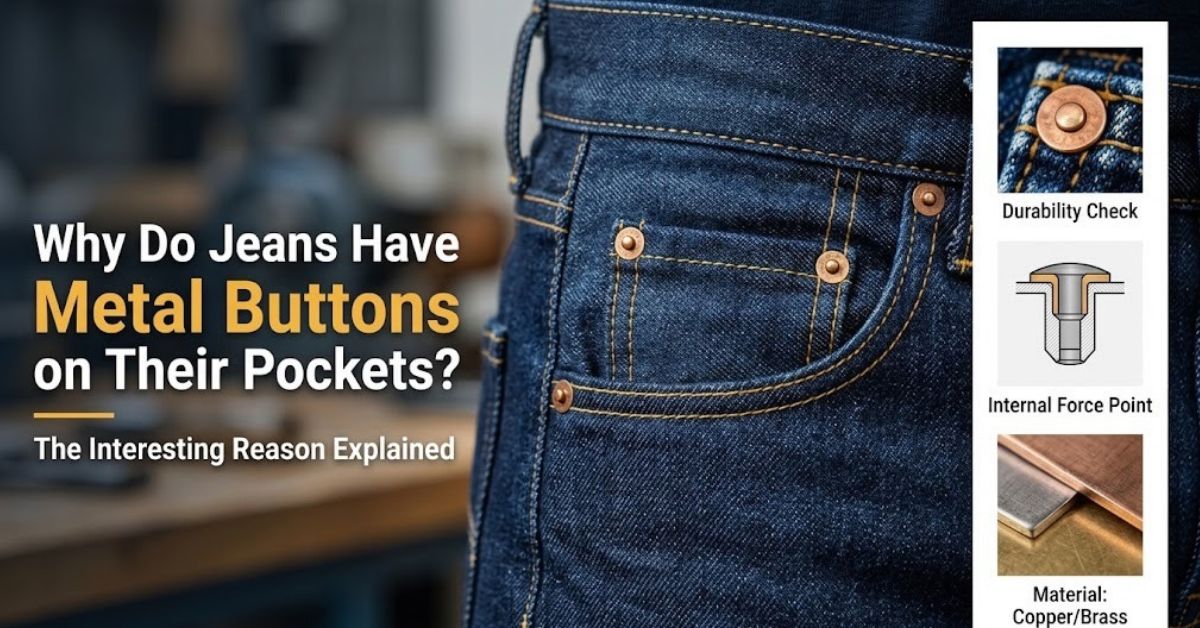
Jeans are one of the most popular clothing items in the world. People of all ages wear them because they are comfortable, practical, and easy to style. However, there is one small detail that many people rarely notice: the tiny metal buttons attached to the corners of jeans pockets.
These metal pieces may look like simple decorations, but they serve a practical purpose. Known as rivets, they help strengthen the areas of jeans that face repeated pulling and pressure during everyday use.
The interesting part is that these small metal pieces have a history dating back more than 150 years. They were introduced to solve a common problem faced by workers whose trousers often tore around the pockets.
Here is how these tiny metal pieces became an important part of modern jeans.
What Are the Small Metal Buttons on Jeans Called?
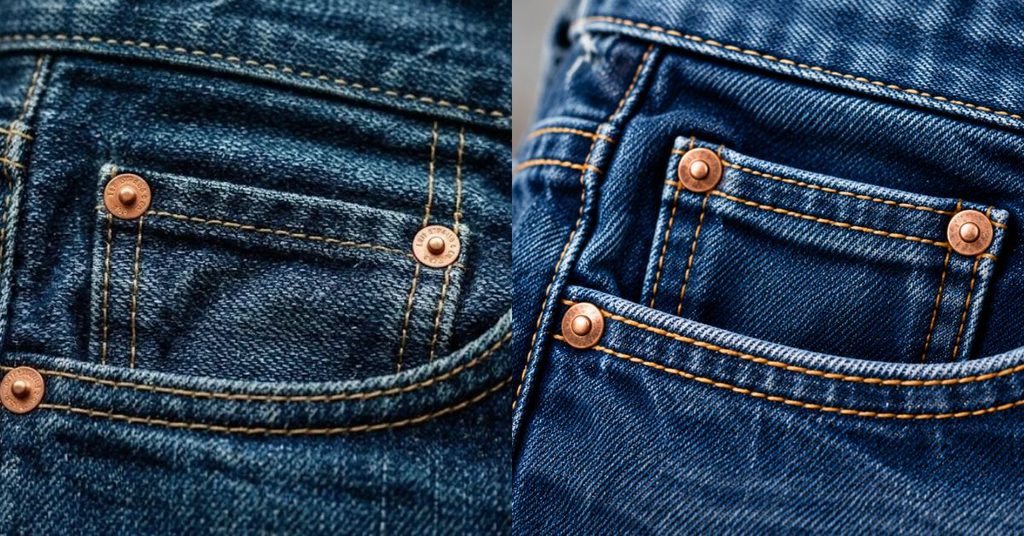
The small metal pieces found near the corners of jeans pockets are called rivets. They are usually made from metal and are fitted through the fabric to help hold the layers together.
Unlike ordinary decorative buttons, rivets are designed to provide extra support to specific areas of clothing.
Jeans pockets are used throughout the day to carry items such as mobile phones, keys, coins, and other small belongings. Repeated use can put pressure on the pocket corners and the surrounding stitching.
Over time, this pressure can weaken the fabric and cause the stitching to come loose. Rivets help reinforce these areas and reduce the chances of damage during normal use.
Although they cannot prevent every type of tear, they can help make jeans more durable when combined with good-quality fabric and strong stitching.

Why Do Jeans Pockets Need Extra Support?
To understand the purpose of rivets, it is important to look at how jeans are used.
People regularly put their hands into their pockets, remove items, and carry belongings while walking, sitting, or working. These everyday activities create repeated stress around the pocket openings.
The corners of pockets are particularly important because they are points where fabric and stitching meet. When pressure is applied repeatedly, these areas can become weak.
Rivets provide additional support at these points. They help secure the fabric layers and reduce the risk of the pocket corners tearing under ordinary use.
This feature was especially useful when jeans were mainly worn by workers who needed clothing that could withstand demanding daily activities.
Today, rivets continue to serve a similar purpose in many traditional denim designs.
Who Invented Rivets for Jeans?
The story of jeans rivets began in the United States during the 1870s.
At that time, workers needed strong trousers that could withstand long working hours. However, their pockets and other heavily used areas often tore after repeated use.
A tailor named Jacob Davis came up with a practical solution. He began using small metal rivets to strengthen the parts of trousers that were most likely to tear.
Davis realised that his idea could become a successful product, but he needed a business partner to help protect and develop the invention.
He contacted Levi Strauss, a businessman who supplied clothing materials and other goods. The two worked together to patent the rivet-reinforced trousers.
On May 20, 1873, Jacob Davis and Levi Strauss received US Patent No. 139,121 for their method of reinforcing work trousers with metal rivets.
This development became an important milestone in the history of modern jeans.
How Did Rivets Change the History of Jeans?
The introduction of rivets helped address a practical problem in work clothing. Instead of relying only on stitching, manufacturers could reinforce areas that faced repeated pressure.
This was particularly useful for workers who needed durable trousers for physically demanding jobs.
The combination of strong denim fabric, practical pocket designs, and metal rivets helped establish the reputation of jeans as hard-wearing clothing.
Over time, jeans became popular beyond workplaces. They gradually entered everyday fashion and became a common choice for people around the world.
As their popularity grew, many of their original design features remained. Rivets were among the details that helped preserve the traditional appearance of denim jeans.
What began as a practical solution eventually became one of the most recognisable features of this everyday garment.
Why Do Some Jeans Have No Metal Rivets?
If you look at different styles of jeans, you may notice that some have visible metal rivets while others do not.
This does not necessarily mean that jeans without rivets are poorly made. Manufacturers use different designs and construction methods depending on the intended use of the garment.
Some jeans rely on reinforced stitching or other techniques to strengthen pocket corners. Others use a cleaner design with fewer visible metal details.
Comfort is another consideration. Metal rivets can sometimes scratch furniture or other surfaces, particularly when they are placed on the back pockets.
For this reason, clothing manufacturers have changed the placement and design of rivets over the years.
The absence of rivets is therefore not always a sign of lower quality. The strength of jeans also depends on the fabric, stitching, construction, and overall design.
Why Were Rivets Removed From the Back Pockets of Jeans?
Metal rivets were originally used to reinforce areas of trousers that experienced repeated stress. However, placing them on the back pockets created a separate problem.
When people sat down, the exposed metal pieces could scratch wooden chairs, furniture, and other surfaces. They could also cause discomfort in certain situations.
Levi Strauss & Co. responded to this issue by changing the design of its jeans. During the 1930s, the company began concealing the back-pocket rivets beneath fabric.
Over time, visible rivets were removed from the back pockets of many Levi’s jeans. By 1966, the company had moved away from the traditional exposed back-pocket rivets on its regular jeans designs.
This change helped maintain the strength of the pockets while reducing the risk of scratching furniture.
Today, the placement of rivets varies between brands and styles. Some jeans still feature exposed metal details, while others use stitching and alternative reinforcement methods.
Are Metal Rivets Still Useful in Modern Jeans?
Yes, rivets are still useful in many types of jeans, although their importance depends on the design and construction of the garment.
Modern sewing techniques have improved the way clothing is made. Strong stitching and better fabric construction can help reinforce pockets without relying entirely on metal rivets.
However, rivets can still provide additional support at points where fabric experiences repeated pulling.
They are particularly common in traditional denim designs because they combine practical use with a familiar appearance.
It is worth remembering that rivets cannot make jeans completely tear-proof. Poor-quality fabric, excessive weight in pockets, and worn stitching can still lead to damage.
The durability of a pair of jeans depends on several factors working together, rather than on one small metal component alone.
Are Rivets Used Only for Strength, or Do They Also Add Style?
Although rivets were originally introduced for practical reasons, they have also become part of the traditional look of jeans.
Many clothing brands now use metal rivets in different colours, finishes, and shapes. Some feature brand markings or decorative details that help distinguish one design from another.
For many people, these small metal pieces are an expected part of classic denim jeans.
However, their appearance should not be confused with their original purpose. Traditional rivets are primarily used to reinforce the fabric, even though they can also improve the overall design.
This is a good example of how a practical invention can eventually become a lasting fashion feature.
Do All Jeans Need Rivets to Be Strong?
No. Jeans can be durable even without metal rivets.
The overall quality of a pair of jeans depends on the type of denim, the quality of the stitching, the construction of the pockets, and how well the garment is made.
Some manufacturers use reinforced seams and additional stitching to strengthen pocket corners. These methods can provide support without adding visible metal pieces.
When buying jeans, it is helpful to check the stitching around the pockets, the quality of the fabric, and the overall finish.
If the jeans have rivets, make sure they are securely attached and do not feel loose. However, do not judge the entire garment by the presence or absence of these small metal pieces.
Good construction matters more than any single design feature.
How Can You Make Your Jeans Last Longer?
Even well-made jeans need proper care. A few simple habits can help protect the fabric and pockets from unnecessary wear.
- Avoid overloading your pockets: Heavy items can put extra pressure on the fabric and stitching.
- Choose the right size: Jeans that are too tight may experience additional stress around the pockets and seams.
- Check the stitching: If the pocket corners begin to loosen, repairing them early may prevent further damage.
- Follow washing instructions: Washing jeans according to the care label can help maintain the fabric.
- Store them properly: Avoid pulling jeans roughly by the pocket openings, especially when they contain heavy items.
These simple steps can help keep your jeans in good condition for longer.
Conclusion
The small metal buttons found on jeans pockets are called rivets, and their original purpose is to strengthen areas that experience repeated pressure. They were introduced in the 19th century to help prevent work trousers from tearing around the pockets.
Jacob Davis and Levi Strauss patented their rivet-reinforced trouser design on May 20, 1873, marking an important moment in the history of jeans.
Today, rivets remain a familiar feature of traditional denim, although many modern jeans use reinforced stitching and other methods instead.
The next time you put on a pair of jeans, take a closer look at these tiny metal pieces. What may seem like a small decorative detail is actually part of an invention that helped shape the jeans we wear today.
